
As a science-based organization, the Xerces Society produces dozens of publications annually, all of which employ the best available research to guide effective conservation efforts. Our publications range from guidelines for land managers, to brochures offering overviews of key concepts related to invertebrate conservation, from books about supporting pollinators in farmland, to region-specific plant lists. We hope that whatever you are seeking—whether it's guidance on making a home or community garden pollinator-friendly, advice on developing a local pesticide reduction strategy, or detailed information on restoring habitat—you will find it here!
Find Publications
Use the search functions to sort by publication type (books, guidelines, fact sheets, etc.), location, and/or subject (agriculture, gardens, pollinators, pesticides, etc.).


for Invertebrate Conservation
This gardening almanac was created to share some simple seasonal tips to help you create and maintain pollinator habitat. We hope that it inspires you throughout the seasons.

Essays on Invertebrate Conservation
The Spring 2014 issue of Wings Magazine sheds light on two very different and largely understudied groups of invertebrates—marine species impacted by oil spills and arachnids.

Regarding Docket Numbers: FWS-HQ-ES-2025-0048 ; FWS-HQ-ES-2025-0029 ; FWS-HQ-ES-2025-0039 ; FWS-HQ-ES-2025-0044
The U.S. Fish and Wildlife Service and other federal agencies have proposed major revisions to the Endangered Species Act (ESA) that would weaken science-based protections, reduce habitat safeguards, and make it harder for vulnerable species to receive the protections they need to survive.
The Xerces Society invites members of the public to sign on to our letter opposing changes that would weaken one of the best tools we have to protect at-risk invertebrates. In our letter, we make the following points:

Essays on Invertebrate Conservation
There are many ways to be involved with protecting invertebrates. In this issue, we explore three very different contributions to this work: partnering with growers and food companies to create habitat on farmlands; scientists reintroducing a butterfly into its ancient haunts; and Xerces’ volunteer ambassadors connecting with people.

The Xerces Habitat Kit Program offers carefully selected, regionally appropriate, climate-resilient plants directly to partners. Read this postcard and visit the Xerces Society Habitat Kit Program webpage to learn more!

This guide walks readers through how to decide if an insect in the garden is an issue that needs to be managed, and provides examples of ecologically-friendly solutions.
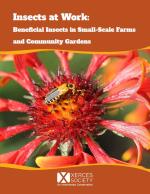
Beneficial Insects in Small-Scale Farms and Community Gardens
Decision-making on farms can be a balancing act, often with limited time, labor, and resources. Installing native plants to support beneficial insects can provide stability for a small-scale farm or community garden. Similar to the multiple roles friends and neighbors play in our local communities, beneficial insects can offer many services to a farm or garden. Lacewings, predatory and parasitic wasps, flies, beetles, native bees, and other insects play a vital role, day and night, in the production of agricultural crops through pollination, pest control, and building healthy soils.
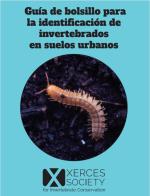
Aproximadamente el 25% de todos los organismos conocidos del planeta son animales que viven en el suelo durante toda o parte de su vida. La mayoría de estos animales son invertebrados que interactúan con microbios, plantas y entre sí, dando forma a la vida de suelos saludables.
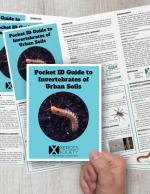
About 25% of all known organisms on the planet are animals that live in the soil through all or a portion of their lives. The majority of these animals are invertebrates that interact with microbes, plants, and each other, forming the life of healthy soils.